
High watermelon supply from Spain and Greece lowers wholesale prices in Europe
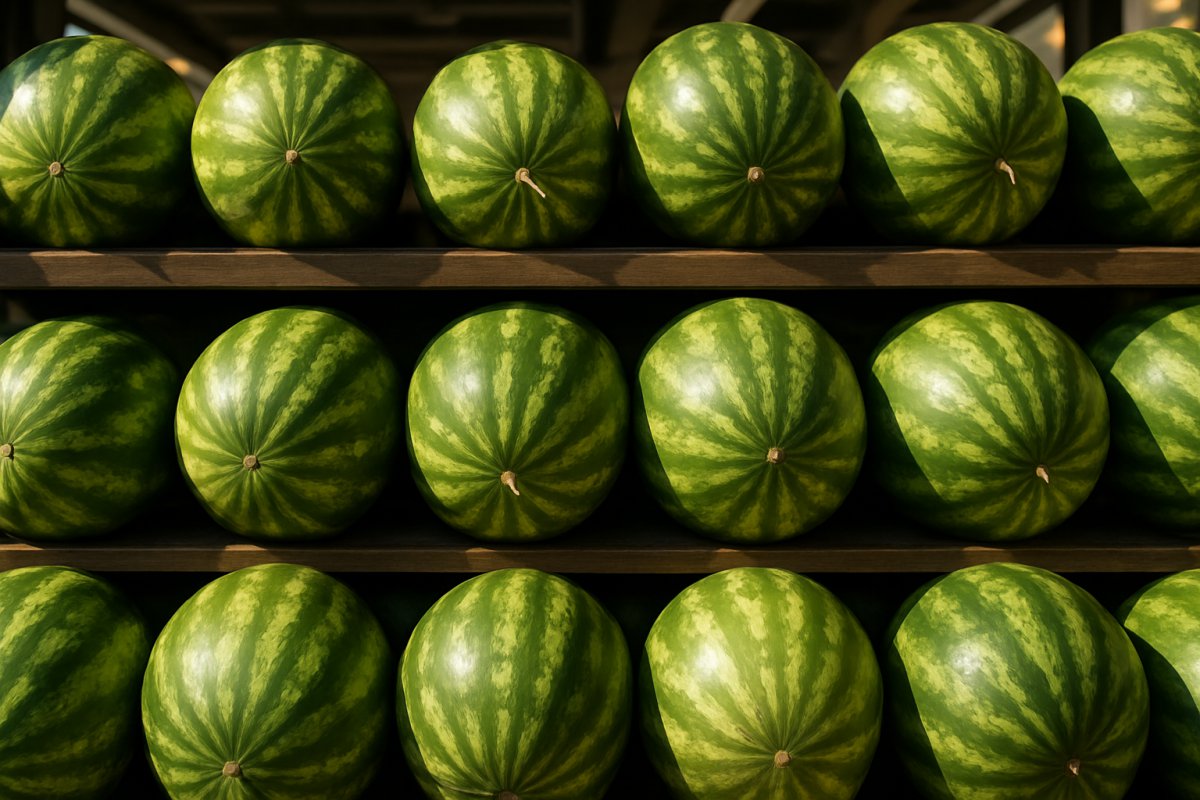
European wholesale watermelon prices are under downward pressure in July 2026 due to high supply from Spain and Greece, with strong export flows from both origins.
The summer of 2026 sees abundant watermelon supply on European wholesale markets, primarily from Spain and Greece. Spanish watermelon cultivation increased by 11% year-on-year to 12,272 hectares for the 2025/2026 season. Spain remains the leading supplier, with main export destinations including Germany, France, and the Netherlands. Greek watermelon exports between 1 May and 17 July 2026 reached 195,983 tonnes, a marginal increase of 0.19% over the same period in 2025. Exports to Poland rose sharply by 24.1%, while shipments to Ukraine grew by 122.5%. Deliveries also increased to Slovakia (+28.5%), Czechia (+12.6%), and Germany (+1.9%), but declined in Romania, Serbia, Hungary, Italy, and Bulgaria.
In Italy, the wholesale price of watermelons continued to fall as of 20 July 2026, driven by seasonal supply peaks and steady demand. The Lazio region contributed to the oversupply, and hot weather accelerated fruit ripening. In Spain, quality checks in Almería reported an average Brix level of 10.38, with more than 96% of lots meeting export standards, and a rising share of production under biological crop protection.
Central and Eastern Europe, including Ukraine, also experienced a seasonal peak in watermelon supply in July, leading to lower wholesale prices. Uzbekistan saw a drop in watermelon prices in the second week of July, reflecting abundant regional supply. Turkish and Iranian production and export volumes to Europe remained stable in summer 2026.
Paraguay is expanding its watermelon production, with output forecast to exceed 80,000 tonnes in 2026. Although most of its supply is for the domestic market, Paraguay is increasingly targeting export opportunities as quality and logistics improve. Over 70% of production is sold locally, but exports are rising as part of a broader agricultural diversification strategy.
Brazilian watermelons are subject to new US tariffs, but the impact on European trade is limited. Europe continues to be a primary destination for Brazilian watermelon exports, as the US market becomes less significant due to increased duties.
Material prepared by the editorial team of fresh-market.info, editor Artur Spiker