

Kazakhstan to Ban Apple Imports, EU Wholesale Prices Drop Sharply
Kazakhstan will introduce a ban on apple imports, including from the EU, from August to December 2026. Meanwhile, wholesale apple prices in major EU producer countries have fallen by 18.5% year-on-year.
Kazakhstan announced a ban on apple imports from 1 August to 31 December 2026. The restriction will apply to all foreign suppliers, including key European exporters. In 2025, the value of agricultural exports from the EU to Kazakhstan, with apples as a major item, reached nearly €107 million. The ban is expected to reduce export opportunities for EU suppliers during this period and may redirect export flows to alternative markets, including within the EU.
In the European Union, wholesale prices for sorted apples in the four main producer countries averaged €0.87/kg (3.78 PLN/kg) in June 2026, representing an 18.5% decline compared to June 2025. In Germany, prices were the lowest among major producers at €0.43/kg (1.85 PLN/kg), down 6% month-on-month, 55% lower than a year earlier, and 43% below the five-year average for June. These price reductions reflect oversupply and weak market sentiment in Western Europe.
Early summer varieties such as Early Geneva and Piros are now available on European wholesale markets. In July, the starting price for very early apples was approximately €0.92/kg (4.00 PLN/kg), with more recent lots of summer apples selling for €1.4–1.5/kg (6.00–6.50 PLN/kg). However, demand for these varieties remains limited due to competition from other seasonal fruit.
The EU has certified new quality-enhancing biostimulants for apple production, such as PomArt®, which is authorised across the EU to improve apple coloration. The product is distributed by Sumitomo Chemical Agro Europe S.A.S. and is expected to be used in the 2026/27 season by growers targeting higher quality exports.
Storage and logistics remain a critical issue for exporters across Europe and Ukraine. For apples and other fruit, proximity of storage facilities to harvest areas is essential to maintain quality, especially in hot weather, as transport over long distances without cooling can result in deterioration before reaching buyers in key European consumption centres.
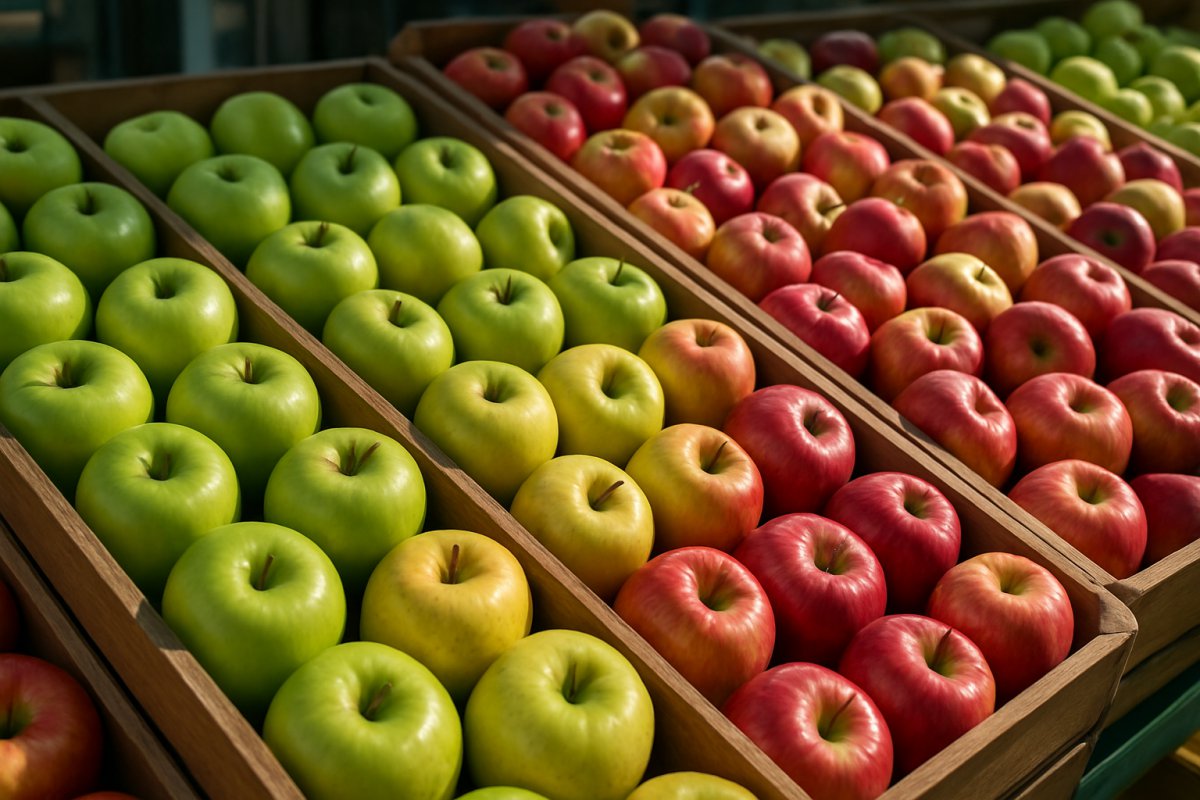
Material prepared by the editorial team of fresh-market.info, editor Artur Spiker · Illustrative image generated by AI