
Significant reduction in potato acreage in Northwest Europe; Spanish harvest overlaps with old French stocks
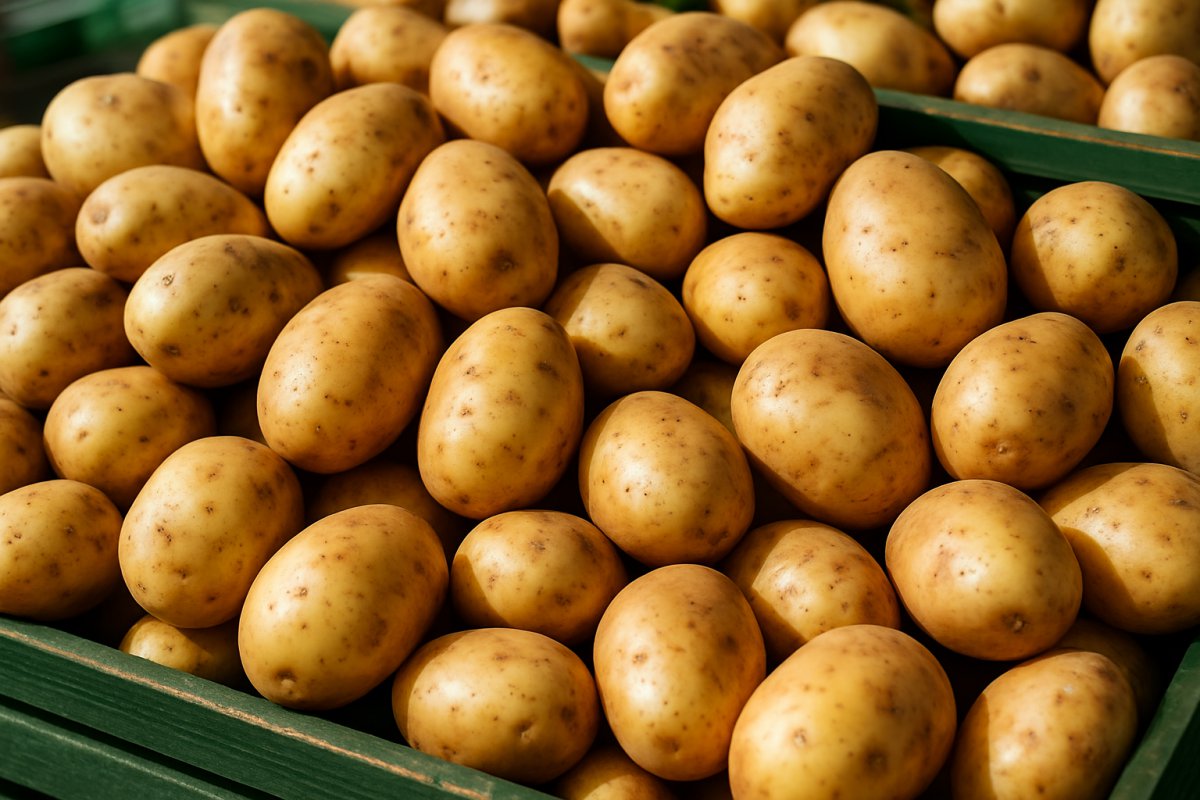
Northwest European countries report a double-digit reduction in potato acreage for the 2026 season, while the Spanish new harvest faces strong competition from lingering French stocks and an overlap of regional harvests.
The North-Western European Potato Growers (NEPG) report a marked decrease in table potato acreage for the 2026 season: Belgium down 16.6%, the Netherlands down 15.1%, France down 9.7%, and Germany down approximately 11%. The total potato area in NEPG member states is expected to fall by 67,000 hectares, from 604,100 ha in 2025 to 536,900 ha in 2026. This reduction follows a period of spot prices below €0.20/kg (2 EUR/100 kg) for weeks and even months during the difficult 2025/26 season, leading to grower uncertainty and a shift in planting decisions. Despite this, ex-field contract prices offered by processors for the new season remain low, around €0.13/kg (12.50 EUR/100 kg), which does not cover rising input costs for many growers.
In Spain, the new potato harvest in Castile and León began in mid-July, with yields slightly lower and tuber sizes smaller than usual at the start of the season. The harvest in León coincided with the late finish of the Murcia and Andalusia campaigns, which were delayed nearly three weeks due to unfavourable weather at the start of the year. Simultaneously, the Madrid region also began its harvest, resulting in an unusual overlap of production areas. This situation, combined with higher-than-usual old potato stocks from France and other European countries, has increased commercial pressure and contributed to falling potato prices in the last two weeks of early July.
Spanish exporters report that the extended availability of old French potatoes, due to high storage volumes, has directly overlapped with the new Spanish crop, limiting export opportunities for Spain to a window of just two weeks. The increased supply across Europe has reduced the potential for Spanish potato exports to markets such as Poland, as buyers have access to a wider range of European origins at competitive prices.
In Italy, early potato production in Emilia-Romagna is focused on fresh, high-quality product for local consumption, with harvests available until the end of August. The sector is working to promote local identity and quality through research and regional branding, but no export price data for Italy is available in July 2026.
Weather remains a key factor for yields and quality in Northwest Europe. The June heatwave has already introduced uncertainty for harvest prospects, and further outcomes will depend on weather in the coming months. The reduced area in major producing countries may impact supply in late 2026, but for now, market prices remain under pressure due to high availability and overlapping harvests.
Material prepared by the editorial team of fresh-market.info, editor Artur Spiker