

Bronisze: Young potato prices drop to €0.67/kg amid heatwave sell-off
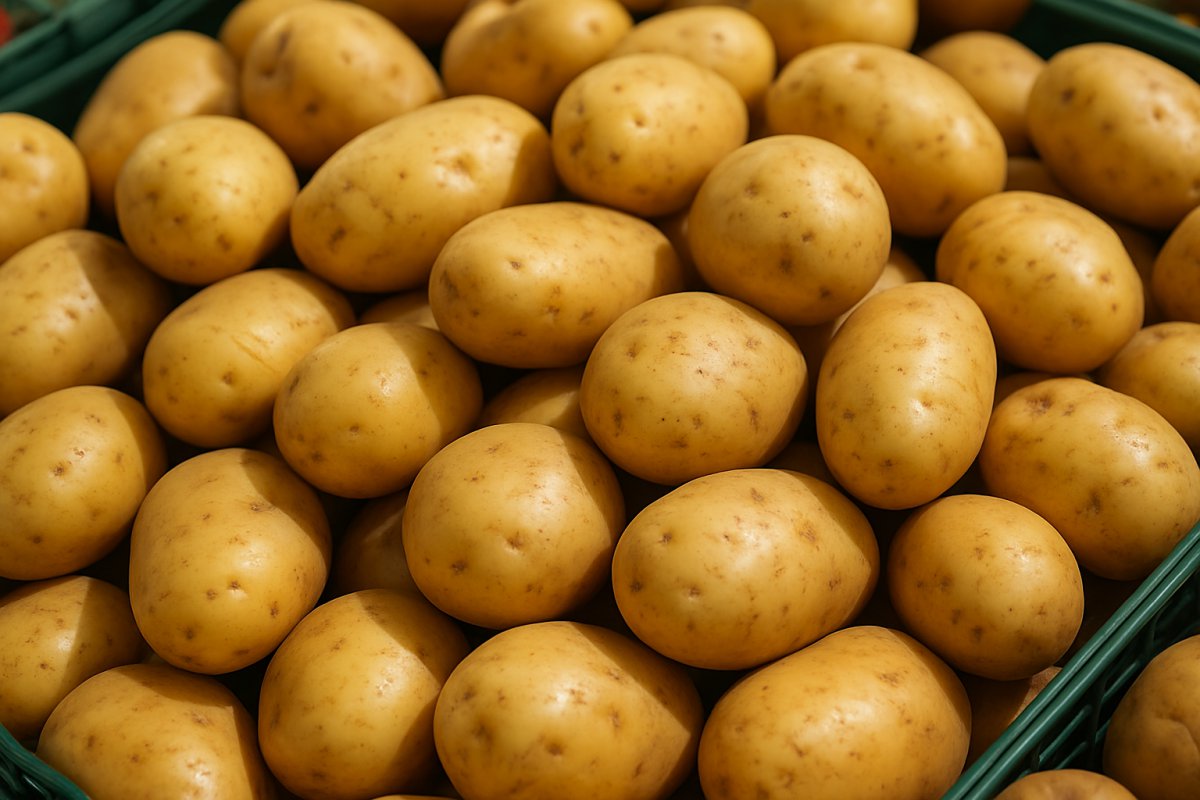
Heatwave conditions in late June triggered emergency sales of young potatoes at the Bronisze wholesale market near Warsaw, causing prices for certain varieties to fall to €0.67/kg. Domestic supply has increased, with Polish new potatoes dominating trade, although imports from Egypt and Cyprus remain available.
At the Bronisze wholesale market in the last week of June 2026, young potatoes of the Riviera variety with yellow flesh were sold in exceptional cases for as little as €0.67/kg (10 PLN/15 kg sack) due to rapid sell-offs prompted by record high temperatures. Under more typical conditions, prices for popular domestic varieties such as Irga remained higher at around €0.47/kg (2.00 PLN/kg), with Irga in particular maintaining stronger prices due to more limited availability compared to yellow-fleshed types.
The market saw a clear shift toward domestic young potatoes, with most buyers now choosing Polish produce over imported alternatives. However, imported young potatoes from Egypt and Cyprus were still present at Bronisze, trading at €0.47–0.58/kg (2.00–2.50 PLN/kg). These imports now mainly serve buyers seeking firmer tubers for specific culinary uses, rather than competing directly on price with Polish new potatoes.
Old-crop potatoes from storage have a marginal presence, with domestic lots selling for up to €0.15/kg (10 PLN/15 kg sack) for white-fleshed types, and imported stored potatoes from the Netherlands and Belgium offered at around €0.22/kg (14 PLN/15 kg sack). Demand for these older potatoes continues to decline as fresh domestic supply increases.
On the supply side, the total area sown to potatoes in Poland for 2026 dropped to 185,100 ha, down from 210,800 ha in 2025, returning to levels seen between 2020 and 2023. The largest potato-growing region is Wielkopolskie, with 28,300 ha reported. The reduction in area follows a period of expansion in 2024–2025, when many growers had turned to potatoes as an alternative crop.
The ongoing heatwave has not only accelerated sales but also disrupted harvesting routines, shortening market hours and pushing growers to sell quickly to avoid losses from heat-related quality deterioration. Wholesalers with cold storage capacity are playing a larger role as temperatures remain high.
Material prepared by the editorial team of fresh-market.info, editor Artur Spiker