

Central Poland: Blueberry Prices Drop Amid High Supply, Weather Impacts Yields
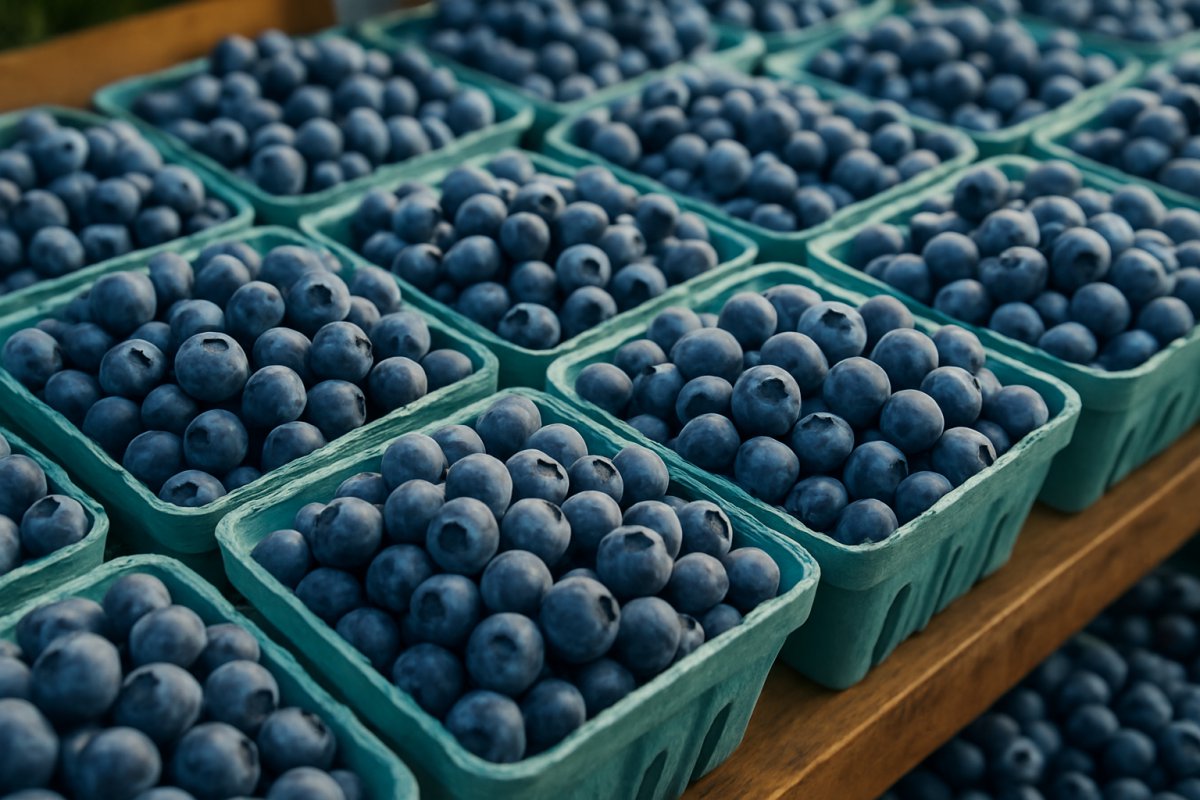
Blueberry prices in Poland have fallen in mid-July 2026 due to increased supply from ongoing harvests, while extreme weather has reduced yields for some varieties.
Wholesale blueberry prices in Poland have decreased since the start of widespread harvesting. At the Bronisze wholesale market and other regional hubs, the influx of fresh domestic fruit is exerting downward pressure on prices, though no exact PLN or EUR figures are cited in the available sources for the Polish market. Market observers attribute the drop to high availability as most growers have now commenced large-scale picking.
In central Poland (Leszczyny Małe, Pabianice county), growers report that the early 'Duke' variety is yielding near-normal crops, but 'Bluecrop' output is slightly lower than in previous years. The 'Chandler' variety has suffered substantial losses following spring frosts, especially on poorer sites, significantly reducing its harvest potential. Weather challenges included not only frosts but also a late-June heatwave with temperatures above 35°C and prolonged spring drought, which have led to sunburn and quality issues in several berry crops, including blueberries.
Despite weather setbacks, Polish blueberry exports remain a major component of the country's fruit and vegetable trade. Blueberries, along with other berries, contribute toward the over €2.4 billion in fruit and fruit product export value recorded in 2025. Poland continues to hold a leading position among European blueberry producers and exporters.
On the retail side, Polish convenience stores are expanding offerings of ready-to-eat blueberries, responding to consumer demand for fresh, healthy snacks. This trend is supported by the inclusion of blueberries among single-serve fruit options in major retail chains.
The risk of Drosophila suzukii (spotted wing drosophila) infestations is rising during the ongoing harvest, particularly as mature and overripe fruit accumulates on bushes. Cooler, wet weather in July is conducive to pest activity, prompting increased monitoring by growers.
Material prepared by the editorial team of fresh-market.info, editor Artur Spiker