

Central Poland: Strawberry Season Ends, Prices Hold Amid Heat Wave
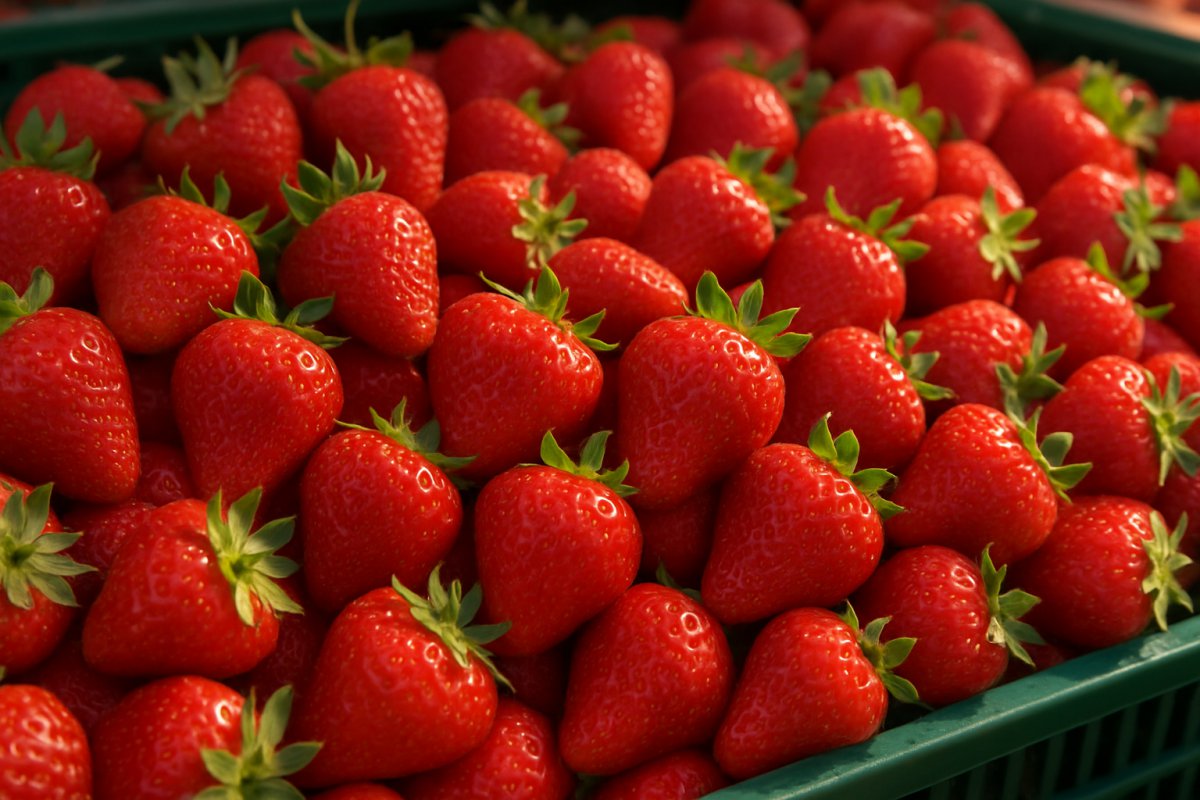
Polish open-field strawberry harvests are ending as extreme heat reduces supply and quality, with wholesale prices remaining firm despite logistical challenges.
On the Bronisze wholesale market near Warsaw, strawberry availability has declined sharply in the last days of June 2026. As of June 24–26, prices ranged from €2.8–3.5/kg (12–15 PLN/kg), with market experts indicating that further price drops are unlikely due to short supply. At the Kalisz wholesale market, strawberries were sold at €3.3–4.7/kg (14–20 PLN/kg), and in Łódź, a 2-kg punnet cost €4.2–5.8 (18–25 PLN per punnet), corresponding to €2.1–2.9/kg. Lower-quality fruit, particularly heat-damaged batches, traded for €5.1–5.8 per 2-kg punnet (22–25 PLN), while better-quality late varieties fetched €6.3–7.0 per punnet (27–30 PLN), or approximately €3.2–3.5/kg.
Field production is ending rapidly as ongoing extreme heat has caused fruit to spoil on the plants and accelerated the end of the season. Growers report that the majority of fruit currently available is of lower quality; up to 75% of supply consists of heat-affected or soft berries, with only about 25% considered higher quality and selling out quickly, often directly at the farm gate. Some producers note that during the previous period of high supply (June 21–22), poor-quality fruit was sold for as little as €3.3–3.5 per 2-kg punnet (14–15 PLN), but volumes have since dropped.
Processing demand remains strong, reflected in farm-gate prices for strawberries for freezing, which reached €1.9–2.0/kg (8.00–8.50 PLN/kg) in key regions as of June 24–25. However, processors and intermediaries are increasingly rejecting soft or moldy fruit, leading to financial losses for suppliers. Many processing plants are ending strawberry purchases by June 27, shifting to other berries such as currants from the following week. This transition limits outlets for late strawberry varieties.
Weather conditions in June have been marked by a prolonged heat wave following a spring of frosts, cold spells, and rain, all of which have negatively impacted both yields and fruit quality. Night irrigation combined with daytime heat has resulted in fruit "cooking" before reaching buyers. The pest Lygus rugulipennis has also contributed to losses, particularly by damaging developing fruit and reducing the share of marketable yield.
Compiled from Polish trade press (2026-06-26)