

End of Strawberry Season in Central Poland: Lower Supply, Wide Price Fluctuations
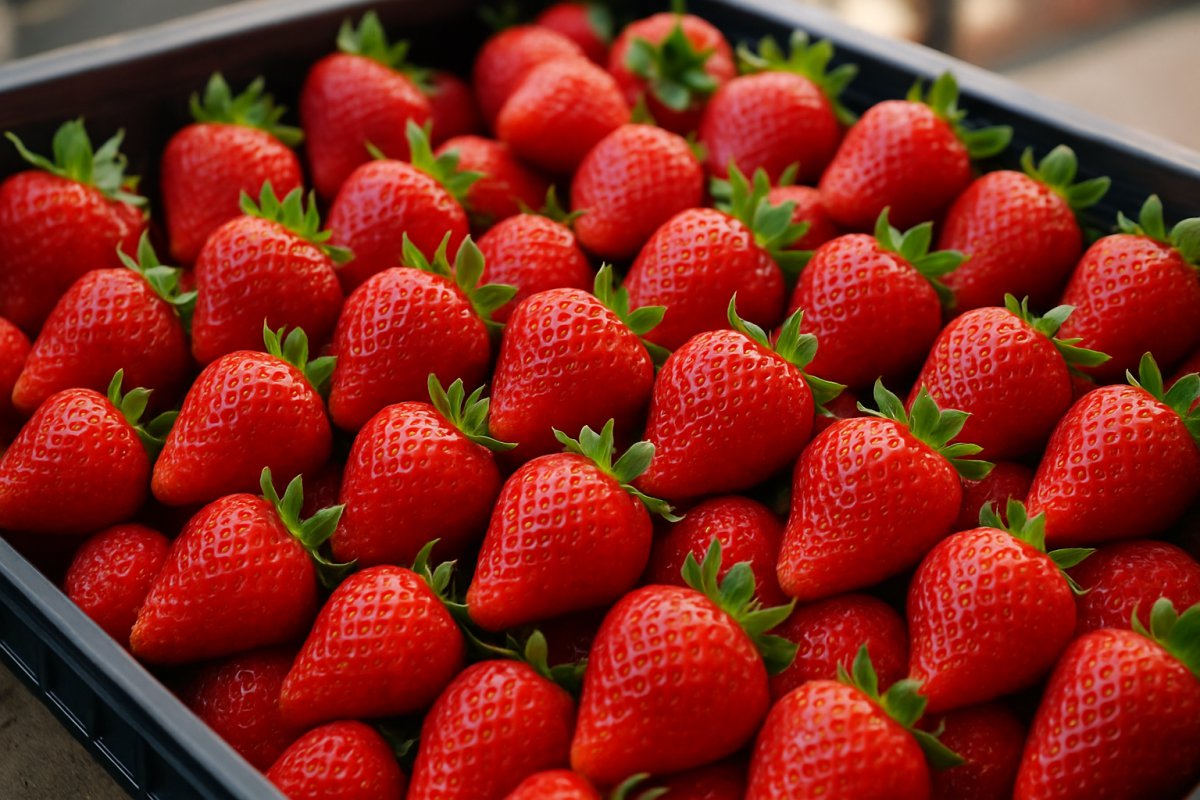
The Polish strawberry season is ending earlier than usual, with significantly reduced supply and strong price volatility at both wholesale and farm-gate levels due to spring frosts and persistent rain.
Wholesale prices for dessert strawberries on the Bronisze market and in the Rawa Mazowiecka region, 17–18 June 2026, ranged from €5.2–5.4/kg (22–23 PLN/kg) for medium quality fruit to €5.9–6.1/kg (25–26 PLN/kg) for premium quality. The highest prices were recorded for Asia and Tea varieties, up to €6.6/kg (28 PLN/kg), with occasional transactions at €7.0/kg (30 PLN/kg) for top lots. At the Warka market, 18–19 June, prices for Marmolada and Sybilla varieties stood at €4.2–4.7/kg (18–20 PLN/kg). Strawberries for processing with calyx in the Grójec region, 18 June, were purchased at €0.8/kg (3.50 PLN/kg), down from €1.0/kg (4.20 PLN/kg) earlier in the month.
The supply of high-quality strawberries has decreased sharply due to spring frosts—reaching as low as -9°C at ground level—and subsequent heavy rainfall of 50–100 mm in some areas during the main harvest window. These weather events reduced yields, damaged flowers, and led to a high incidence of grey mould, especially in the Grójec and Warecki regions. Many growers are now selectively harvesting only the best fruit, with a significant share of the crop diverted to processing rather than fresh sales.
The rapid deterioration in fruit quality after rains has resulted in a volatile and unpredictable market. Some growers report negotiating €3.5/box (15 PLN/łubianka) one day, and €6.6/box (28 PLN/łubianka) the next, depending on buyer demand and available supply. There is increased buyer interest in premium varieties such as Asia and Tea, with demand for premium fruit outstripping availability, leading to quick sales at wholesale markets.
The season is now in its final days, with late varieties such as Malwina, Florence, and Faith being harvested. Growers anticipate that open-field strawberries will disappear from the market by early July. The overall volume of fruit available for both fresh market and industry is considerably lower than in previous years, with some growers in central Poland ending harvests early due to disease pressure.
Weather conditions remain unstable. After prolonged rainfall, temperatures have begun to rise gradually, but cool nights continue to slow ripening and limit the supply of fresh fruit to local markets.
Compiled from Polish trade press (2026-06-19)