

Imported Cherries Flood Kraków Market, Polish Prices Diverge Regionally
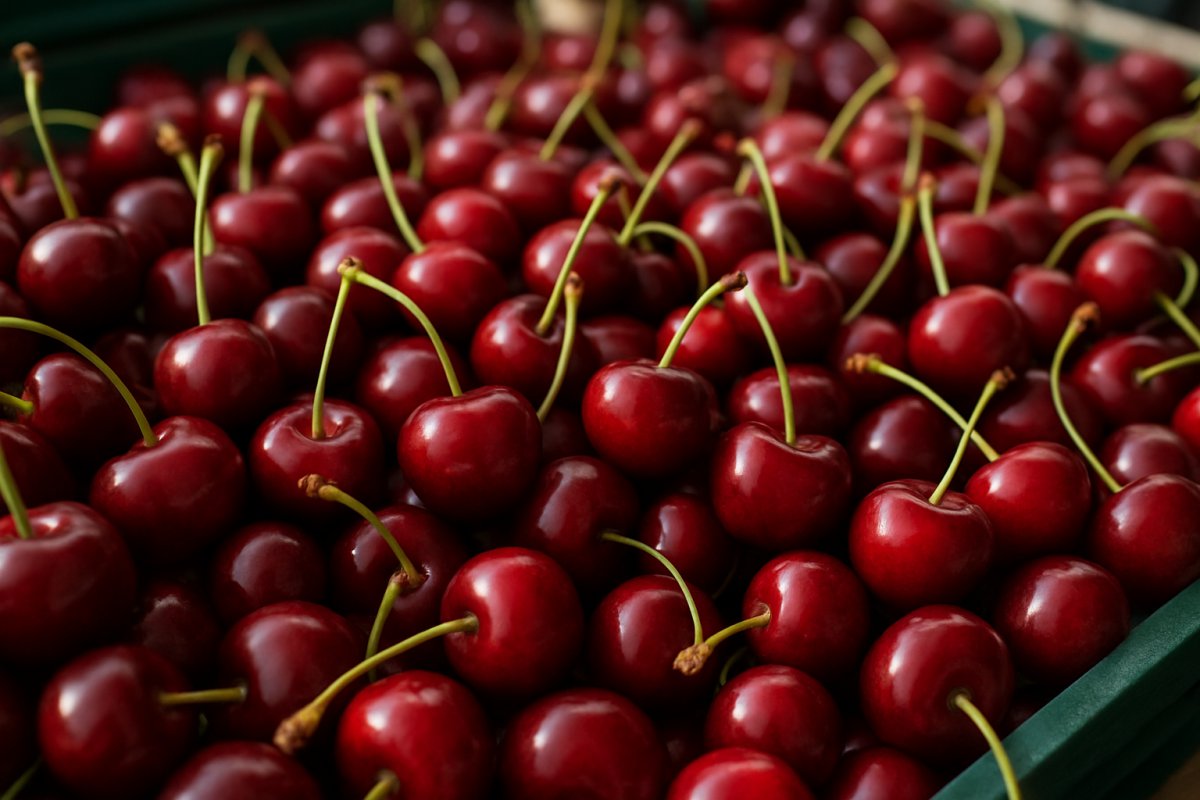
Large volumes of imported cherries from Greece, Serbia, and Turkey are dominating Polish wholesale markets, especially in Kraków, putting pressure on domestic producers. Wholesale prices for Polish cherries are highly varied, with top prices at Bronisze and lower rates in other regions.
At the Bronisze wholesale market near Warsaw in mid-June 2026, Polish cherries are trading at €4.2–5.9/kg (18–25 PLN/kg), with large-fruit Carmen variety reaching €5.9/kg (25 PLN/kg) and Summit at €4.2–4.7/kg (18–20 PLN/kg). On other major wholesale markets, prices are lower: Łódź (Zjazdowa) at €3.3–5.9/kg (14–25 PLN/kg), Elizówka near Lublin at €3.5–4.7/kg (15–20 PLN/kg), and Kalisz at about €3.5/kg (15 PLN/kg). In Poznań, a 5 kg crate of cherries costs €18.8–21.1 (80–90 PLN). On Warsaw’s Hala Mirowska retail market, prices are highly dispersed, ranging from €3.8/kg (16 PLN/kg) up to €9.4/kg (40 PLN/kg) for the largest, darkest fruit; Summit is sold at €3.5/kg (15 PLN/kg), Burlat at €3.8–4.2/kg (16–18 PLN/kg), and Vega at €7/kg (30 PLN/kg).
On the Rybitwy wholesale market in Kraków, imported cherries from Greece, Serbia, and Turkey are widely available and dominate the supply. Prices for these imports are as low as €3.3/kg (14 PLN/kg), with initial offers at €3.8/kg (16 PLN/kg). Domestic Burlat cherries were reported as nearly unsellable over the weekend due to competition from imports. Market participants report that imported fruit is often of average or below-average quality and freshness, but supermarkets and wholesalers prefer these shipments for logistical reasons and lower purchase costs.
Polish cherry supply is lower than usual due to significant losses from spring frosts, particularly impacting early varieties such as Sweet Ariana. Some orchards, especially those with frost protection, managed to save 50–60% of the normal harvest, with Kordia, Staccato, Simona, and Tamara varieties faring best. In less protected or neglected orchards, yields are minimal or lost entirely. Rain in June has further complicated harvesting conditions and affected fruit quality, particularly in traditional, unprotected orchards.
Demand from supermarkets and major wholesalers is focused on large, uniform shipments, which currently favors imported fruit over smaller-scale domestic production. Consumer demand remains highest for large, dark-red cherry varieties, driving top prices for Carmen and similar types. The increasing availability of domestic cherries is gradually expanding market supply, but domestic fruit faces intense competition from imports, especially in the initial weeks of the Polish season.
Compiled from Polish trade press (2026-06-18)