

Kazakhstan Bans Polish Apples, Early Varieties at Bronisze See Low Demand
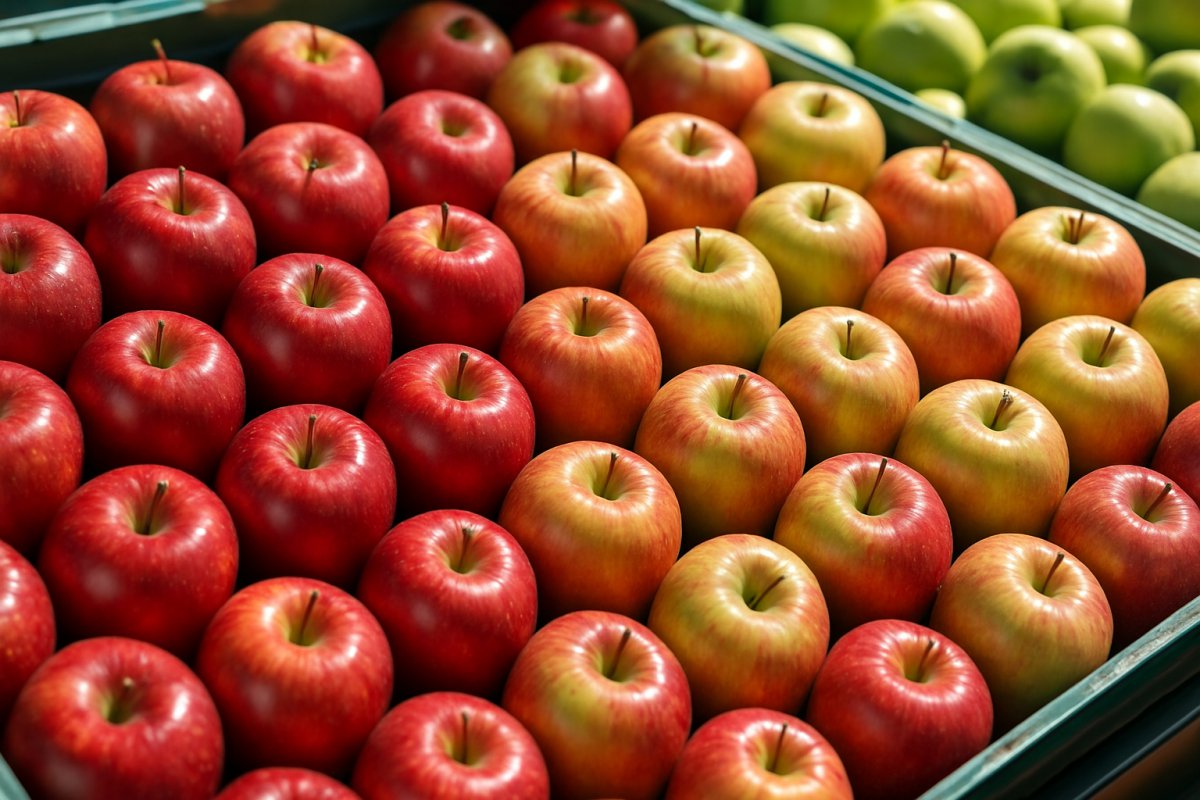
Kazakhstan will halt imports of Polish apples from 1 August 2026, affecting a significant export market. On the domestic market, early apple varieties are available at Bronisze, but buyer demand remains weak.
Kazakhstan will introduce a ban on apple imports, including from Poland, between 1 August and 31 December 2026. In 2025, Poland exported agricultural products worth nearly €107 million to Kazakhstan, with apples as a key commodity. The Polish government has formally objected to the ban and initiated talks, but no phytosanitary issues with Polish apples have been reported by Kazakhstan to date.
At the Bronisze wholesale market near Warsaw on 28 July 2026, prices for early Geneva apples ranged from €1.2–1.5/kg (5–6.65 PLN/kg). The Piros variety has also appeared, while Paulared apples from the Grójec region were offered at €0.9/kg (4 PLN/kg) for fruit above 75 mm diameter. Other current Bronisze prices are: Cortland €0.7–1.2/kg (3–5 PLN/kg), Empire €0.6–0.9/kg (2.5–4 PLN/kg), Gala €0.6–0.8/kg (2.5–3.5 PLN/kg), Golden Delicious €0.6–0.9/kg (2.5–3.75 PLN/kg), Jonagored €0.5–0.8/kg (2–3.5 PLN/kg), Ligol €0.5–0.7/kg (2.25–3 PLN/kg), and Lobo €0.7–0.9/kg (2.85–4 PLN/kg).
Farm-gate prices for apples in June 2026 dropped to €0.37/kg (1.60 PLN/kg) for Prince, Ligol, and Szampion destined for sorting, and €0.30/kg (1.30 PLN/kg) for Idared. This reflects a nearly 40% decrease compared to June 2025. The average price for sorted Polish apples in June 2026 was €0.62/kg (2.70 PLN/kg), showing only a slight recovery from May but still significantly below last year's levels.
Despite the arrival of early varieties like Early Geneva and Papierówka at Bronisze since early July, demand remains limited due to competition from other seasonal fruits. The first offers of Paulared have appeared, with buyers actively seeking the variety, although harvest of this cultivar is still in its initial phase.
Recent rainfall has increased orchard soil moisture, which growers are using for late-season fertilisation. Disease pressure, especially on Golden Delicious, has risen due to the wet conditions, with visible symptoms of leaf spot and the need for continued protection against storage diseases.
Material prepared by the editorial team of fresh-market.info, editor Artur Spiker