

Poland: Apple Prices Drop as Stocks Remain High, Demand Weakens
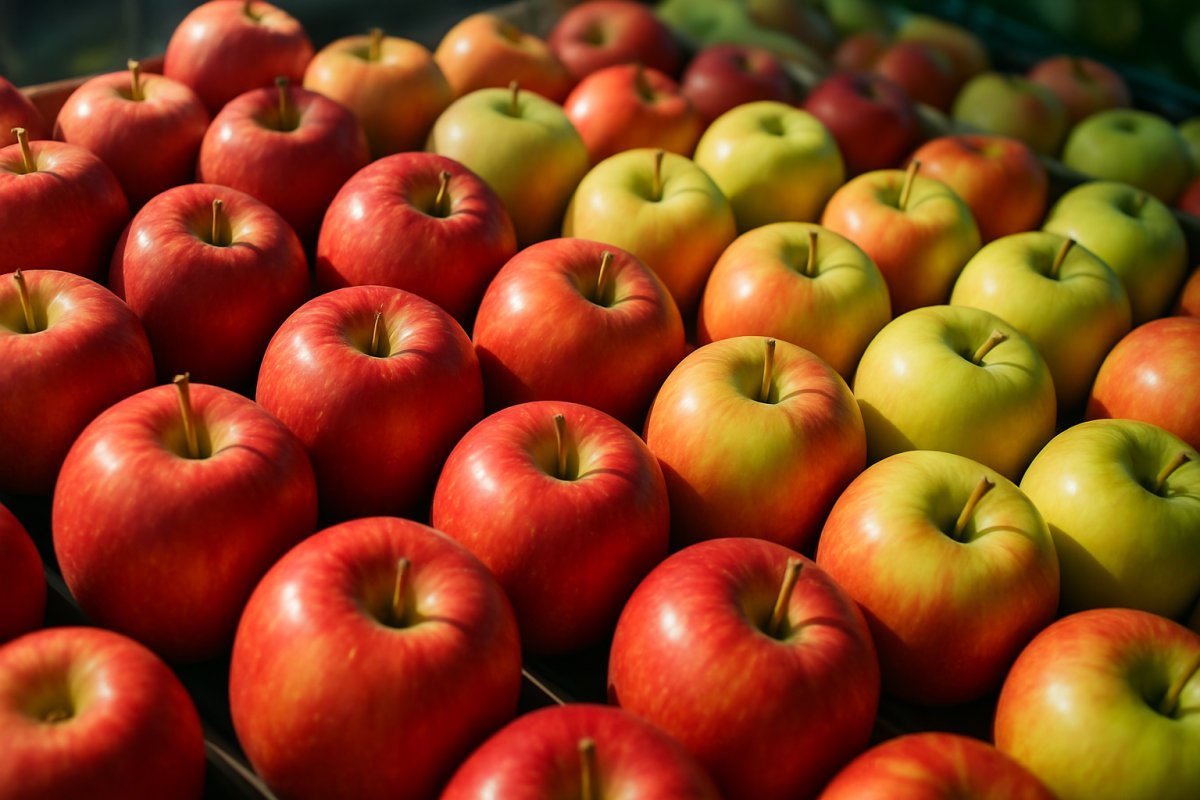
At the turn of June and July 2026, Polish dessert apple farm-gate prices fell by nearly 10%, with weak domestic and export demand and historically high cold storage stocks.
The end of the 2025/26 marketing season for Polish dessert apples has seen a clear decline in prices and demand. Average farm-gate prices for first-class dessert apples at the end of June and beginning of July 2026 were about €0.34/kg (1.46 PLN/kg), roughly 10% lower than in late May and early June. Standard varieties saw price decreases of 7–9%. For the Red Jonaprince variety, offers for sorted apples were as low as €0.26/kg (1.10 PLN/kg) after nine months of storage.
The drop in prices is linked to both higher-than-expected supply and weak buyer interest in Poland and abroad. On June 1, 2026, Poland held 227,000 tonnes of apples in cold storage, accounting for 22% of total European stocks, which reached a record 1 million tonnes for this period. The largest stored Polish varieties were Red Jonaprince (67,000 tonnes), Golden Delicious (60,000 tonnes), and Idared (60,000 tonnes).
Wholesale and retail demand for apples declined as cherries and soon blueberries dominated the market. Domestic consumers showed limited interest, and export shipments also slowed, with major export varieties like Gala and Red Delicious having limited availability and already experiencing price corrections earlier in the season. Exporters faced further challenges as Kazakh authorities are preparing to introduce a temporary ban on apple imports from August to December 2026.
Weather events have also impacted supply in some regions. In late June and early July, severe hailstorms hit orchards in the Sandomierz region and Gołębiow, causing deep damage to fruit. In some orchards, up to 90–100% of apples were damaged, with many expected to fall before harvest. These losses are localised but contribute to regional supply disruptions.
Poland is exploring new export opportunities, with discussions taking place in late June 2026 with a Kenyan delegation regarding apple shipments to East Africa. However, fulfilling phytosanitary requirements and building trade relationships remain prerequisites before any significant volumes can be exported to Kenya.
Material prepared by the editorial team of fresh-market.info, editor Artur Spiker