

Polish Cherry Market: Wholesale Prices Under Pressure from Imports, Lower Domestic Harvest
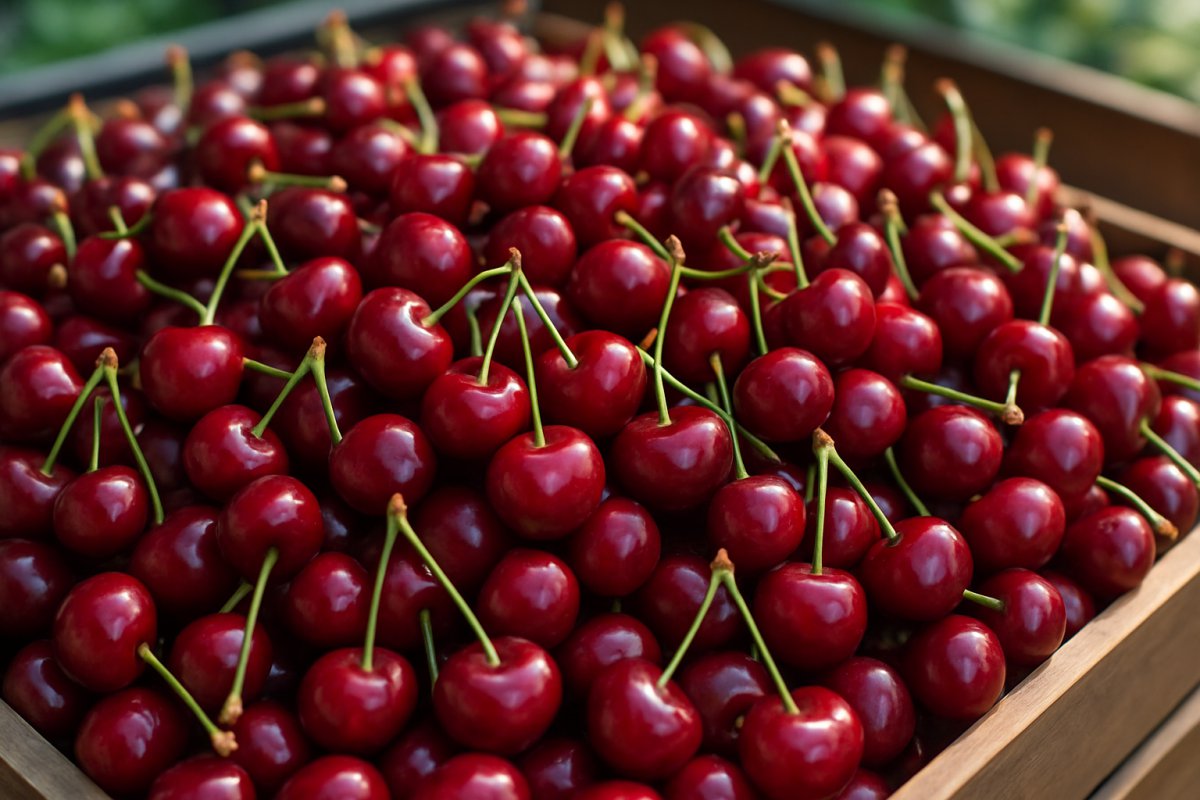
Polish wholesale markets in mid-June 2026 are seeing significant volumes of imported cherries from Southern Europe, leading to wide price disparities and pressure on domestic producers amid a reduced Polish harvest.
At the Bronisze wholesale market near Warsaw on 18 June 2026, prices for domestic cherries ranged from €3.5 to €6.6/kg (15–28 PLN/kg), depending on size and quality. Imported cherries from Serbia, Greece, and Spain were widely available, priced between €3.5/kg (15 PLN/kg) for smaller fruit and €5.2/kg (22 PLN/kg) for the largest, best-quality lots. On the Giełda Kaliska market, domestic cherries sold for €2.8–4.7/kg (12–20 PLN/kg), while imported fruit was priced at €1.6–1.9/kg (7–8 PLN/kg). In Poznań's WGRO market, cherries traded at €4.2–7.0/kg (18–30 PLN/kg), and in Łódź at €3.3–5.2/kg (14–22 PLN/kg), without clear distinction between domestic and imported origins.
Farm-gate prices for Polish cherries in the Grójec region on 18 June 2026 were reported at €3.3/kg (14 PLN/kg) for fruit over 22 mm, €3.8/kg (16 PLN/kg) for over 24 mm, and €4.0/kg (17 PLN/kg) for over 26 mm. However, rapid price drops were noted, with some buyers already offering €2.8/kg (12 PLN/kg) for larger calibers as imported cherries entered the market in larger volumes. In retail, imported cherries were advertised in chains such as Lidl at €3.5/kg (14.99 PLN/kg), undercutting recent farm-gate prices for Polish fruit.
The influx of imported cherries is significant, with wholesalers and retailers sourcing large quantities from Turkey, Serbia, and Greece. Some domestic markets, such as Kraków's Rybitwy, have been described as "flooded" with imports, and local Polish varieties like Burlat have become difficult to sell. Sellers report that the quality and freshness of imports are often lower than domestic cherries, but the logistics and uniform supply from abroad drive market preference. Wholesale buyers prioritize large, uniform shipments, which are easier to source from foreign exporters.
Polish cherry supply in 2026 is reduced due to spring frosts, with some orchards expecting only 50–60% of a normal crop. Losses varied by location and protection measures, with some newer Kordia plantings faring better due to frost protection. Weather has also been variable, with frequent rain following earlier drought and frost episodes, further affecting yields and cherry quality in traditional, unprotected orchards.
Grower sentiment reflects concern over the combined impact of lower domestic yields and aggressive import competition. Some producers note that the market is already well supplied with foreign fruit, making it difficult to distinguish the share of Polish cherries in wholesale and retail channels at this stage of the season.
Compiled from Polish trade press (2026-06-19)