

Sharp Drop in Polish Sour Cherry Prices Despite Lower Harvest
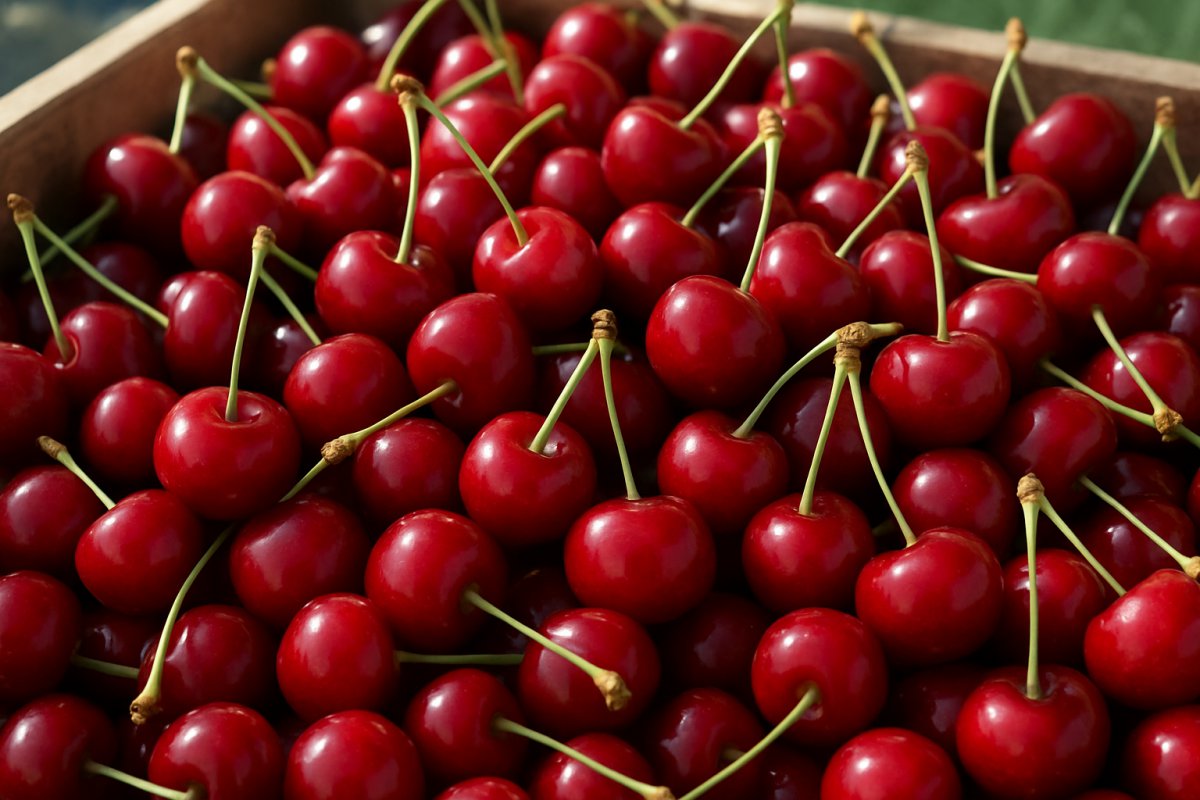
Sour cherry prices in Poland have fallen rapidly in late July 2026, with wholesale and farm-gate prices dropping by over 40% within days, despite a reduced national harvest due to spring frost and summer drought.
At the Bronisze wholesale market near Warsaw on 29 July 2026, sour cherries (mainly Łutówka variety) were quoted at €1.4–1.8/kg (6–8 PLN/kg), matching the recent trend of falling prices at wholesale and farm-gate levels. In the Sandomierz region, farm-gate prices for sour cherries dropped from €1.5/kg (6.50 PLN/kg) on 22 July to €0.8/kg (3.50 PLN/kg) by 27 July. In the Grójec area, prices fell from €1.4/kg (6.20 PLN/kg) to €0.9/kg (4.00 PLN/kg) over the same period. For industrial use, cherries for freezing dropped from €1.0–1.1/kg (4.20–4.50 PLN/kg) on 26 July to €0.9/kg (4.00 PLN/kg) on 27 July. The price for cherries destined for juice processing was reported at €0.5/kg (2.00 PLN/kg) on 27 July, as Poland's largest processors began buying.
The rapid price declines have occurred despite a notable reduction in supply: spring frosts and subsequent drought have led to lower yields in most major growing regions. Both the Sandomierz and Grójec areas reported below-average harvests, with some orchards also affected by hail. The lower supply has not translated into higher prices, as typically expected during a short harvest.
Trade sources report that the price drops have been nearly simultaneous across the country, with many buying stations and processors offering identical prices, and frequent changes even within a single day. Producers have little flexibility, as sour cherries must be picked and sold quickly due to their short shelf life. In many cases, growers are required to deliver fruit without knowing the final price in advance.
Some growers started the harvest paying labourers €0.5–0.6/kg (2.00–2.50 PLN/kg) for picking, based on early higher price expectations. However, the subsequent crash in market prices has left many producers facing financial strain, especially those who agreed to high picking wages before the price collapse.
The Związek Sadowników RP and regional officials have questioned the cause of the synchronized price reductions and have called for investigations into potential price-fixing among major processors. Technical stoppages and simultaneous plant shutdowns during peak harvest have also been reported, further affecting the market situation.
Material prepared by the editorial team of fresh-market.info, editor Artur Spiker · Illustrative image generated by AI