

Bronisze pepper prices hold after Armenian imports leave Warsaw market
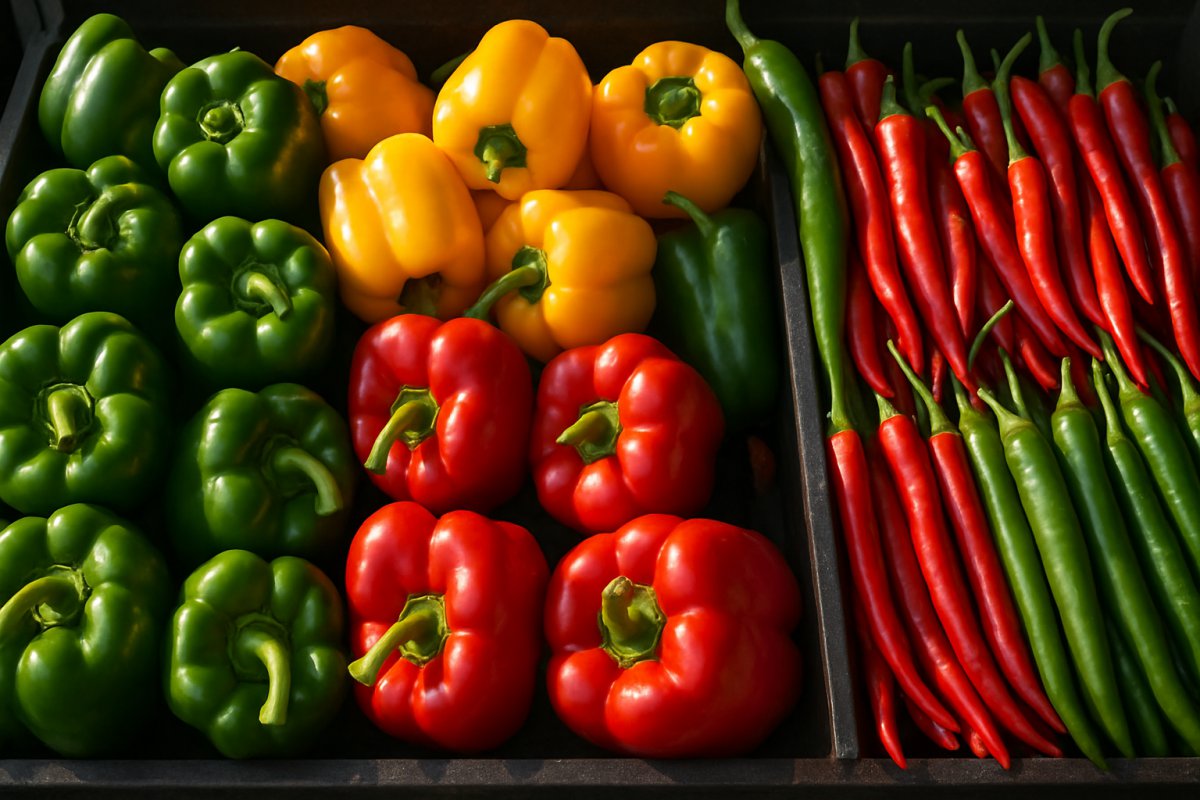
Domestic pepper prices at the Warsaw Bronisze wholesale market remained after last week’s correction, with red and yellow peppers quoted on 19 August at about €1.4–2.1/kg (6–9 PLN/kg). The Armenian pepper that appeared in mid-August at about €1.4/kg (6 PLN/kg) was no longer present on the market.
On 19 August, red and yellow peppers at the Bronisze wholesale market near Warsaw were quoted at about €1.4–2.1/kg (6–9 PLN/kg), while green peppers were quoted at about €0.9–1.2/kg (4–5 PLN/kg). One day earlier, domestic pepper at Bronisze was trading mainly at about €1.4–1.6/kg (6–7 PLN/kg), after prices had reached about €1.8/kg (8 PLN/kg) the previous week.
The correction followed the arrival of Armenian pepper at Bronisze in mid-August. That imported product was offered at about €1.4/kg (6 PLN/kg), and 10–12 trucks reportedly reached the Warsaw wholesale market. The Armenian supply found buyers relatively quickly, but by 18 August it was no longer available at Bronisze.
Domestic pepper, Bronisze wholesale market, 18 August, was also sold at about €6.9–8.1 per package (30–35 PLN per package), corresponding to about €1.4–1.6/kg (6–7 PLN/kg). Second-class domestic pepper, with defects in shape or skin, was priced at about €4.6 per package (20 PLN per package), or about €0.9/kg (4 PLN/kg).
Earlier higher domestic prices were linked in the market to lower Polish availability. Sources cited strong exports of Polish pepper to other EU countries and a smaller cultivated area this season, after some growers switched to crops described as easier and cheaper to produce, including courgettes. Bronisze market prices for domestic pepper were reported to be about 40% higher year on year before the latest correction.
In the second half of August, pepper plantations in Poland were still in harvest, while plants were continuing to develop further fruit. Recent weather included periods of high temperatures followed by storms, rainfall and cooler conditions, with water availability and rapid humidity and temperature changes affecting vegetable plantations differently depending on crop stage and field conditions.
Material prepared by the editorial team of fresh-market.info, editor Artur Spiker · Illustrative image generated by AI